
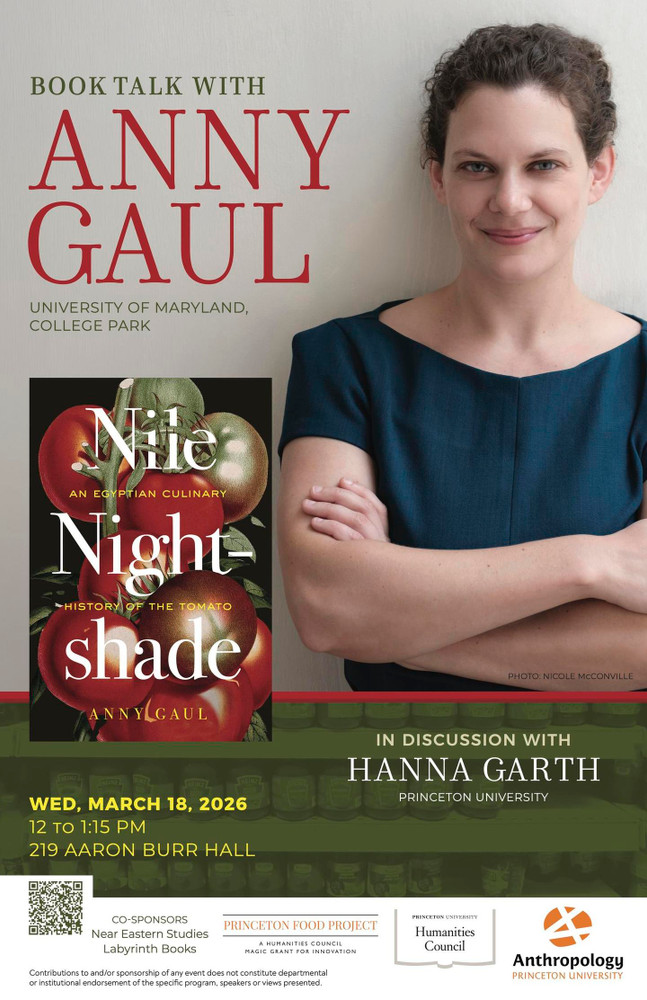
Anny Gaul in conversation with Hanna Garth: "Nile Nightshade: An Egyptian Culinary History of the Tomato"
Mar 18th 2026
Events @ Princeton University
Wed 3/18 @ 12:00PM
219 Aaron Burr Hall, Princeton University
By the end of the twentieth century, the tomato, indigenous to the Americas, had become Egypt's top horticultural crop and a staple of Egyptian cuisine. The tomato brought together domestic consumers, cookbook readers, and home cooks through a shared culinary culture that at times transcended differences of class, region, gender, and ethnicity—and sometimes reinforced them.
In Nile Nightshade, Anny Gaul shows how Egyptians' embrace of the tomato and the emergence of Egypt's modern national identity were both driven by the modernization of the country's food system. Drawing from cookbooks, archival materials, oral histories, and vernacular culture, Gaul follows this commonplace food into the realms of domestic policy and labor through the hands of Egypt's overwhelmingly female home cooks. As they wrote recipes and cooked meals, these women forged key aspects of public culture that defined how Egyptians recognized themselves and one another as Egyptian.
Anny Gaul is a cultural historian whose research and teaching interests lie at the intersections of food, gender, and culture in the Arabic-speaking world, and an assistant professor of Arabic Studies at the University of Maryland, College Park. Her research and writing begin with the premise that if we take culinary knowledge seriously in all its forms (written, oral, embodied) it can offer us new ways of understanding the world.
Hanna Garth is Assistant Professor of Anthropology at Princeton University, author of Food in Cuba: The Pursuit of a Decent Meal, and coeditor of Black Food Matters: Racial Justice in the Wake of Food Justice.
This event is organized by Timothy Loh, Cotsen Fellow in the Society of Fellows and Lecturer in the Council of the Humanities and Anthropology at Princeton University, as part of a Humanities Council Magic Project. Sponsored by: Princeton University’s Humanities Council, Princeton’s Department of Near Eastern Studies, Princeton Food Program, and Labyrinth Books.
University programs and activities are open to all eligible participants without regard to identity or other protected characteristics. Sponsorship of an event does not constitute institutional endorsement of external speakers or views presented.